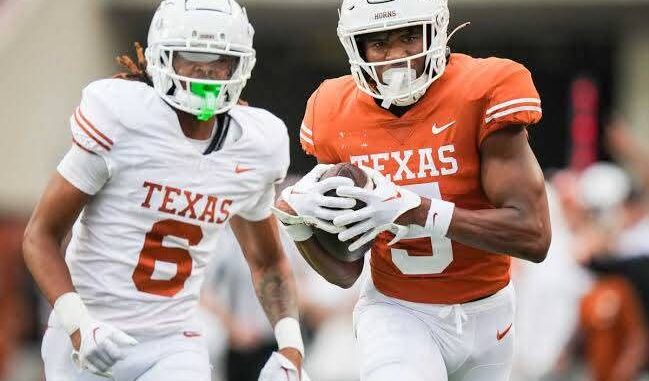
Texas Longhorns Spring Game Disrupted: Star Wide Receiver’s Hamstring Injury Throws Wrench in Offensive Gameplan, Casting Shadow Over Upcoming Season and Raising Questions About Depth at Crucial Position
**Austin, Texas –** A pall of uncertainty has fallen over the University of Texas Longhorns football program following the announcement that a key member of their receiving corps has suffered a significant hamstring injury, threatening to derail their spring training plans and casting doubt on their offensive strategy heading into the upcoming season. While the specific details regarding the injured player have yet to be officially released by the university, sources close to the team have confirmed the injury’s severity, labeling it as a significant setback that will sideline the player for an extended period.
The injury, suffered during a recent practice session, occurred at a critical juncture in the Longhorns’ spring training schedule. The team is currently engaged in intense preparation for the upcoming spring game, a vital opportunity for coaches to assess player performance, experiment with different offensive strategies, and identify potential weaknesses before the regular season begins. The loss of a key wide receiver at this stage throws a major wrench into these carefully laid plans, necessitating significant adjustments to the team’s gameplan and potentially delaying the development of younger, less experienced players.
The exact nature of the injury and its potential long-term implications remain unclear. While official statements from the university and the athletic department are still pending, unconfirmed reports suggest the injury involves a significant hamstring tear, requiring extensive rehabilitation and potentially ruling the player out for a substantial portion of the upcoming season. The recovery period for such an injury can range from several weeks to several months, depending on the severity of the tear and the player’s individual response to treatment. This uncertainty surrounding the player’s recovery timeline has understandably created considerable anxiety amongst fans and coaching staff alike.
The impact of this injury extends beyond the immediate disruption to spring training. The loss of a key receiver places immense pressure on the remaining members of the receiving corps. The Longhorns were already facing questions about the depth and experience of their wide receivers heading into the season, and this injury exacerbates those concerns, placing greater responsibility on less experienced players to step up and fill the void.
The situation highlights the inherent fragility of a football team’s success. A single injury, particularly to a key player at a crucial position like wide receiver, can have a cascading effect, disrupting the team’s rhythm, affecting player morale, and ultimately impacting the team’s overall performance. The coaching staff will now be forced to re-evaluate its offensive strategy, potentially relying more heavily on the running game or adapting its passing schemes to accommodate the loss of a significant playmaker. This recalibration will inevitably require additional time and effort, potentially impacting the team’s preparedness for the upcoming season.
Moreover, the injury underscores the importance of injury prevention strategies in college football. While injuries are an inherent risk in the sport, teams are constantly seeking ways to minimize their occurrence through improved training techniques, strength and conditioning programs, and preventative measures. This injury may prompt the Longhorns coaching staff to re-evaluate its approach to training, particularly with respect to hamstring injury prevention, to reduce the likelihood of similar incidents in the future.
The absence of the injured wide receiver will also provide an opportunity for other players on the roster to showcase their talent and potentially secure greater playing time during the upcoming season. The spring game, while now altered significantly, will still serve as a valuable assessment opportunity for these players, providing crucial data for the coaching staff as they finalize their gameplan for the regular season. The competition for playing time will undoubtedly intensify in the wake of this injury, potentially accelerating the development of younger and less experienced receivers.
Beyond the immediate impact on the field, the injury also serves as a reminder of the human element of college sports. Athletes dedicate immense time, effort, and sacrifice to their sport, and the frustration and disappointment experienced by the injured player and their teammates are significant. The Longhorns community will undoubtedly rally around the injured player, offering support and encouragement as they navigate the rehabilitation process. The team’s resilience and ability to adapt to this unforeseen challenge will be a significant test of their character and resolve. The upcoming season, once perceived with cautious optimism, now hangs in the balance, dependent on the recovery of the injured player and the ability of other players to step into crucial roles.
Leave a Reply