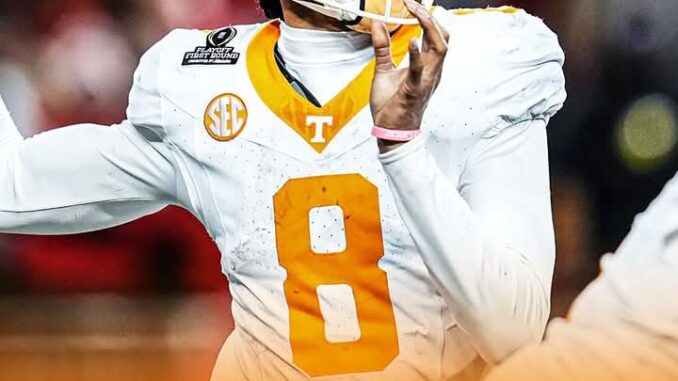
Tensions Rise in Tennessee Football as Star Quarterback Nico Iamaleava Threatens Transfer Amidst Dispute Over Unfulfilled $4 Million NIL Deal, Leaving Fans and Analysts Speculating on the Future of Vols’ Program and NIL Regulations
In a dramatic turn of events that is sending shockwaves through the sports world, Nico Iamaleava, the highly-touted freshman quarterback for the University of Tennessee Volunteers, has reportedly issued an ultimatum regarding his lucrative Name, Image, and Likeness (NIL) deal. Sources indicate that Iamaleava, who was a five-star recruit and one of the most coveted talents in college football, has demanded that the terms of his $4 million NIL agreement be fully honored by the university or he will consider entering the transfer portal, potentially marking a significant shift in the landscape of college athletics and raising questions about the efficacy of NIL agreements.
The 2023 college football season has already been rife with discussions surrounding NIL deals and their implications for recruiting, retention, and overall program management. Iamaleava’s bold stance encapsulates the growing tension between athletes and institutions as players leverage their marketability in this new financial environment. This situation has not only put the Tennessee athletic department in an uncomfortable position but also highlighted the broader implications of NIL regulations that have yet to be fully understood or monitored.
Iamaleava’s emergence on the national scene has been meteoric. After an impressive high school career at Long Beach Polytechnic High School in California, he quickly drew admirers from top college programs across the nation. Expected to lead the Volunteers as a franchise quarterback for years to come, his recent actions signal dissatisfaction with the current state of affairs. As teams scramble to comply with various NIL arrangements, the considerable expectations placed on Iamaleava by the university—and by extension, its fans—have overwhelmingly increased.
Details regarding the specific terms of Iamaleava’s deal remain largely undisclosed, but the reported $4 million payout would make it one of the most valuable NIL agreements in college sports history. This financial arrangement reportedly includes various endorsements, collaborations with brands, and social media promotions. However, sources claim that the fulfillment of these obligations has not progressed as anticipated, spurring Iamaleava’s recent threat to pivot and explore options elsewhere.
In the volatile realm of college sports, where emotions run high and fortunes can change rapidly, the implications of such a move don’t just affect the recruiting landscape for Tennessee. It raises critical questions about university outreach and investment strategies when it comes to enticing elite talent with lucrative deals. The fallout could potentially discourage future athletes from committing long-term to programs that may struggle to meet the financial demands of this new era.
Fans of the Volunteers have taken to social media, displaying both support for Iamaleava’s concerns and frustration at what they perceive to be a lack of commitment from the university’s athletic administration. “We need to back our players,” one fan tweeted. “If Nico doesn’t feel valued, then we need to look at how the university handles these contracts.” Others voiced criticism of the growing financial competition and its potential impact on college sports as a whole: “If college football turns into a bidding war, where does it leave the spirit of the game?”
Recruiting analysts are also weighing in on the broader implications of this situation. Many argue that Iamaleava’s intent to potentially enter the transfer portal highlights a paradigm shift in how young athletes evaluate their college experiences. Potential recruits may increasingly prioritize how well they will be treated financially, aligning their choices based more on transactional agreements rather than tradition or team loyalty.
The impact of Iamaleava’s threat could be profound, with other programs likely monitoring the situation closely. Should he ultimately make the move to enter the transfer portal, responses from top-tier football programs would demonstrate how vital quarterback talent is in the increasingly competitive landscape of college football.
As this story develops, it is not just the future of Nico Iamaleava that hangs in the balance; it is representative of the challenges that lie ahead for college athletics as they navigate a reality where athletes demand more agency and financial recognition than ever before. This episode, while centered around a single athlete, speaks volumes about the direction in which college sports may be headed, leaving fans, pundits, and schools alike grappling with the intricacies of a nascent system that is rapidly evolving.
In the coming days, all eyes will undoubtedly be on Tennessee as they attempt to negotiate a resolution that retains their star player and restores confidence in their athletic program. Until then, the situation remains fluid, with the potential for significant repercussions across the college football landscape.
Leave a Reply