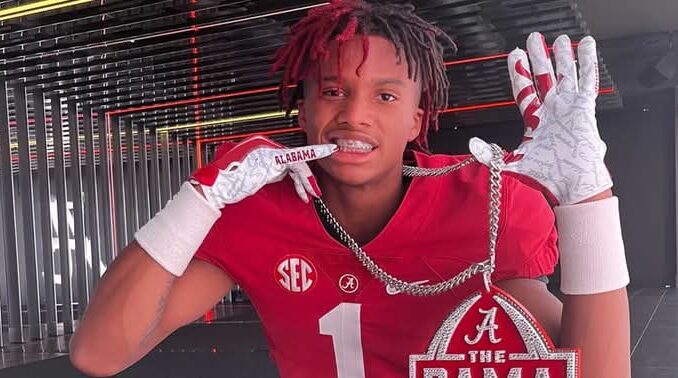
Alabama’s Ryan Williams Rejects $21.5 Million NIL Deal: A Loyalty Play, A Cultural Statement, Or A Calculated Strategic Move? Five-Star Wide Receiver Prioritizes Crimson Tide’s Legacy Over Record-Breaking Financial Incentive
TUSCALOOSA, AL – In a move that has sent shockwaves through the college football world and ignited a firestorm of debate, five-star wide receiver Ryan Williams has publicly rejected a staggering $21.5 million Name, Image, and Likeness (NIL) deal offered by the University of Tennessee. The unprecedented rejection, believed to be the largest NIL offer ever presented to a college athlete, has sparked intense speculation regarding Williams’ motivations, highlighting the complex interplay between personal gain, team loyalty, and the evolving landscape of collegiate athletics.
The offer, reportedly presented by a consortium of Tennessee-based businesses eager to secure Williams’ endorsement, was undeniably lucrative. The $21.5 million package comprised a significant upfront payment, lucrative endorsement deals, and long-term investment opportunities that would have easily surpassed the financial gains of many professional athletes in their early careers. The scale of the proposal underscores the burgeoning power of NIL deals in reshaping the college sports landscape and the increasingly competitive bidding wars for top recruits.
However, Williams, widely regarded as one of the nation’s top collegiate prospects, decisively turned down the offer, choosing instead to remain with the Alabama Crimson Tide. In a statement released through his representatives, Williams cited his commitment to Alabama’s unique culture, its winning tradition, and his desire to contribute to the team’s pursuit of a national championship as the primary reasons for his decision. He emphasized the importance of team unity, the strength of the coaching staff, and the overall supportive environment cultivated at Alabama, suggesting these factors outweigh the immense financial incentive offered by Tennessee.
This decision has prompted a wave of diverse reactions and interpretations. Some analysts view Williams’ rejection as a testament to his unwavering loyalty and commitment to the Alabama program. They highlight the importance of team culture and the significance of prioritizing collective goals over individual financial gain, lauding Williams’ decision as a refreshing counterpoint to the often transactional nature of the modern NIL landscape. This perspective underscores the enduring power of team spirit and the potential for loyalty to transcend immense financial incentives.
Others, however, suggest that Williams’ choice may be a calculated strategic move, possibly positioning him for an even more lucrative NIL deal in the future. By demonstrating unwavering commitment to Alabama and prioritizing team success, Williams might enhance his market value and potentially attract even more substantial offers after a successful season playing for the Crimson Tide. This perspective suggests that his rejection isn’t solely about loyalty, but a calculated play to maximize his long-term earning potential, turning his loyalty into a valuable asset.
The debate surrounding Williams’ decision also raises broader questions about the ethical implications of NIL deals. Concerns remain about the potential for undue influence on athletes’ choices, the possibility of creating internal conflicts within teams, and the need for stronger regulatory frameworks to ensure fairness and prevent exploitation. Williams’ decision has brought these concerns to the forefront of the discussion, highlighting the need for thoughtful consideration of the potential consequences of the rapidly evolving NIL landscape.
Moreover, Williams’ choice highlights the growing influence of factors beyond pure financial incentives in the recruitment of top collegiate athletes. The importance of team culture, coaching staff, academic opportunities, and overall program reputation is increasingly being recognized, suggesting that successful programs will need to cultivate a holistic environment that appeals to top recruits. The “Alabama Way”, characterized by its rigorous training regimen, discipline, and winning tradition, may have proven more attractive than a purely financial incentive.
In conclusion, Ryan Williams’s rejection of the $21.5 million NIL deal is a watershed moment in the ever-changing landscape of college athletics. Whether driven by genuine loyalty, strategic ambition, or a combination of both, his decision has sparked significant debate, raised important ethical considerations, and redefined the conversation surrounding NIL deals and the recruitment of top collegiate talent. The long-term impact of his decision remains to be seen, but it will undoubtedly influence the decisions of future athletes and shape the future of NIL agreements within college sports.
Leave a Reply