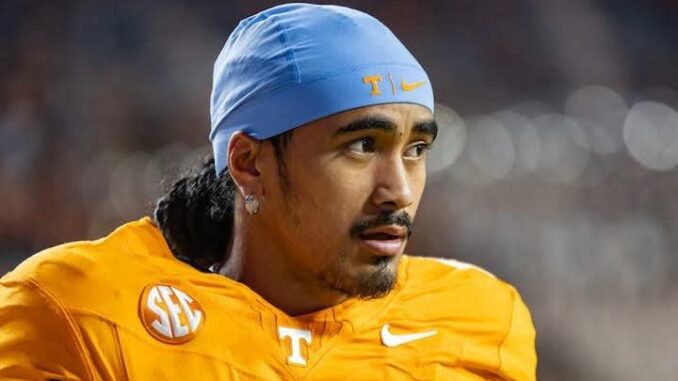
Nico Iamaleava’s Future at Tennessee Hangs in the Balance: Contract Disputes, Absence from Practice, and a Potential Rift on the Horizon Cast a Shadow Over the Volunteer Football Program – A High-Profile Recruit’s Departure Looms as Negotiations Stalemate
**A Crumbling Foundation? Nico Iamaleava’s Uncertain Future at Tennessee Raises Questions About the Program’s Handling of High-Profile Players and the Fine Line Between Scholarship Expectations and Player Compensation.**
Knoxville, TN – (Date – Insert Date Here) – A significant rift appears to be developing between the University of Tennessee Volunteers football program and highly-touted recruit Nico Iamaleava, potentially threatening the future of the highly-anticipated prospect at the program. Reports indicate that Iamaleava was absent from practice today, and sources close to the situation suggest that the absence stems from ongoing contract negotiations, specifically surrounding financial compensation. Tennessee, however, is reportedly standing firm, seemingly unwilling to meet Iamaleava’s demands, potentially setting the stage for a major departure from the program.
The situation, reported by MyLifeMySport, underscores a growing tension between the increasingly lucrative world of professional sports and the traditional structure of college athletics. Iamaleava, a promising quarterback prospect, has reportedly sought to renegotiate his scholarship agreement, a move that has immediately drawn significant attention and ignited debate within the college football community. While financial compensation has historically been a less central consideration in college athlete negotiations compared to other aspects of a scholarship agreement, the current climate is forcing programs to confront this changing reality. This development adds a new dimension to the complex landscape of collegiate athletics, where the expectations and financial considerations of high-profile recruits are in increasing conflict with the traditional understanding of the scholarship model.
The circumstances surrounding Iamaleava’s absence from practice are shrouded in some uncertainty, leaving a gap in the narrative that needs to be filled with further clarification. A multitude of factors could contribute to this omission. Is it purely a negotiation tactic? Are there personal issues influencing his decision? Is there an underlying disagreement regarding the specifics of the scholarship terms, the perceived value of the program, or even personal grievances with the coaching staff? These questions remain unanswered, adding to the growing sense of ambiguity. The media spotlight now intensifies, shining a light on the often-opaque world of college athlete negotiations, where personal needs and institutional expectations can collide.
News outlets and fans are dissecting every detail of the situation, analyzing Iamaleava’s reported demands against the potential implications of his departure. The question being asked is whether the reported salary demands are reasonable, or if they reflect a growing trend of professionalization within college athletics. The financial expectations of top recruits are rapidly evolving, and this case serves as a microcosm of the broader issues facing college athletics. This issue is impacting the long-term financial stability of players and the ability of institutions to attract top talent.
This situation has the potential to set a precedent, and its outcome will be closely watched by other college programs. The outcome of these negotiations and Iamaleava’s eventual decision could significantly influence future recruitment strategies, potentially altering the way that schools value their high-profile athletes and structure their financial commitments. The ability for athletic departments to afford these high-profile recruits and maintain a balance between scholarship needs and compensation is now under a microscope. This underscores the shifting power dynamics between athletes and institutions as the demands for compensation increase.
Tennessee, known for its strong football tradition, is facing a potential challenge to its recruiting efforts. A loss of a high-profile recruit like Iamaleava could have a significant impact on the program’s prestige and future prospects, potentially affecting recruitment efforts for other top-tier prospects. The decision to stand firm in the face of a player’s contract demands highlights the delicate balancing act between meeting player expectations and maintaining a degree of budgetary control. The ripple effect of such a decision could be felt throughout college athletics for years to come.
Observers are also examining the role of Iamaleava’s family in this process. Their influence and involvement in the negotiation process highlight the evolving dynamics of family involvement in the recruitment and early career stages of athletes. The interplay between parental influence, agent involvement, and institutional expectations will be important to scrutinize and could be instructive to other programs moving forward.
The situation surrounding Nico Iamaleava is a critical juncture for the University of Tennessee Volunteers and potentially the entire landscape of college athletics. The resolution of this particular dispute will offer valuable insight into how the dynamic of athlete compensation, particularly for high-profile recruits, continues to shift in the evolving world of collegiate sports. The next few days promise to be crucial as both sides navigate the complexities of this emerging issue.
Leave a Reply