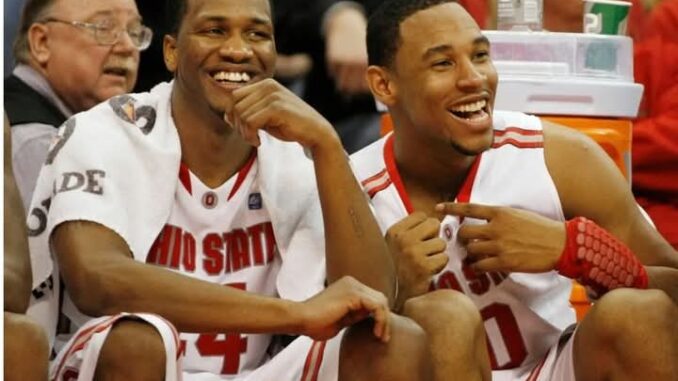
Ohio State Basketball’s Draft Day Disappointments: Re-examining the Careers of Undervalued Buckeye Talent – A Deep Dive into the NBA Draft Histories of Former Ohio State Players, Assessing Potential Draft Position Inaccuracies and Analyzing the Factors Contributing to Unexpected Career Trajectories.
**Columbus, OH –** The NBA draft is a notoriously unpredictable event, a high-stakes gamble where teams bet on the potential of young athletes with varied levels of experience and demonstrable skill. For Ohio State basketball fans, the annual draft often sparks debates about whether certain Buckeyes were overlooked or undervalued by NBA franchises. This year is no exception, with renewed discussion surrounding several former players whose professional careers may not have reflected their college-level prowess. A reassessment of their draft positions raises important questions about scouting accuracy, the complexities of player evaluation, and the inherent risks involved in predicting an athlete’s success at the professional level.
Identifying which former Ohio State player “should have” been drafted higher requires a nuanced approach. It’s impossible to definitively state who was truly undervalued without the benefit of hindsight and a complete understanding of each team’s drafting strategy. However, several Buckeyes have fueled this ongoing discussion due to the disparity between their college achievements and their ultimate NBA draft positions. These discussions are not only interesting but also insightful, allowing for a deeper understanding of how NBA teams make decisions about player selection and how those decisions can impact the trajectory of a young athlete’s career.
One key area for analysis involves evaluating the differing scouting criteria employed by different NBA teams. What one team views as a weakness, another might deem manageable or even a strength. The nuances of player skillsets, adaptability to professional coaching styles, and long-term potential often make for a complex evaluation process. A player who may have excelled in a particular college system might struggle to adapt to the faster pace and more complex offensive and defensive strategies of the professional game. This transition often proves a significant hurdle for talented but relatively inexperienced players transitioning from college ranks to the NBA.
Beyond the technical aspects of player evaluation, other factors also play a role in determining draft position. Physical attributes, such as height, wingspan, and overall athleticism, often hold significant weight in the evaluation process. While impressive college statistics can certainly indicate potential, they don’t always translate directly to professional success. The intangible qualities such as work ethic, leadership potential, and team chemistry also heavily factor into an NBA franchise’s drafting decision.
Another significant consideration is the overall strength of the draft class. A stacked draft class can push even exceptionally talented players down the draft board simply due to the abundance of talent available. If a particular draft year is exceptionally deep in a specific position, a talented player might fall to a later pick, even if he possesses the skills and potential to be a valuable contributor in the NBA.
Examining the careers of Ohio State players who might have been unfairly categorized or overlooked reveals insights into the inherent limitations of pre-draft assessments. Players who excelled in certain aspects of the game in college might struggle to adapt or find a suitable role in the NBA. Injury history, coaching fit, and even simple luck all influence professional career trajectories.
Discussions about draft position often lack the granular detail needed to fully understand the complex interplay of factors at play. The inherent subjectivity of scouting, the varied requirements of different NBA team systems, and the unpredictable nature of professional development significantly influence a player’s ability to meet expectations and even exceed those expectations.
The re-evaluation of the NBA draft positions of former Ohio State players generates valuable insight into the challenges and uncertainties inherent in this pivotal stage of an athlete’s journey. It reminds us that assessing player potential is an art as much as a science, and that the road to professional success in the NBA is a long and unpredictable one. The ongoing debates highlight the importance of understanding the limitations of scouting, the impact of contextual factors, and the human element involved in evaluating and developing young talent. The discussion about past draft day decisions ultimately serves as a valuable lesson in appreciating the complexities of player development and the inherent uncertainties of professional sports.
Leave a Reply